How Often Should You Clean Trash Cans in Richlands, NC?
You take the trash out, roll the cans to the curb, bring them back after collection, and try not to think too much about what is happening inside them.
Then one warm afternoon, you open the lid.
That smell hits you immediately.
For many homeowners, that is the moment they start wondering how often they should actually clean their trash cans. The answer matters even more in eastern North Carolina, where warm weather, humidity, rain, leaking garbage bags, and everyday food waste can turn an outdoor bin into a pretty unpleasant place.
For most homes, trash can cleaning in Richlands, NC should be scheduled every 4 to 12 weeks, depending on how quickly your cans get dirty. Homes with frequent food waste, diapers, pet waste, strong odors, flies, or maggots may benefit from cleaning every 4 weeks. Lighter-use households may find that every 12 weeks works well.
The important thing is not to wait until the smell becomes unbearable.
Richlands is a growing, family-friendly community in Onslow County, and local homeowners spend plenty of time taking care of their yards, driveways, garages, and homes. Your trash cans are one of the most used items on the property, yet they are often forgotten until they become impossible to ignore. (richlandsnc.gov)
Let’s look at how often you should clean them, what changes that schedule, and how to tell when your cans are overdue.

How Often Should You Schedule Trash Can Cleaning in Richlands, NC?
For most homeowners, there are three practical cleaning schedules:
Every 4 Weeks
Monthly cleaning is best for households that want to stay ahead of odors, grime, and pest activity.
This is usually the right choice when your trash cans regularly hold:
Food scraps
Meat packaging
Diapers
Pet waste
Leaking garbage bags
Greasy containers
Yard waste mixed with household trash
Cleaning every four weeks keeps the buildup from sitting inside the can for months at a time.
That matters because once grime dries onto the walls, bottom, lid, and corners, a quick spray with a hose usually does not do much. The can may look wet and slightly cleaner, but the sticky residue and smell can remain.
Monthly service is also useful if you keep your trash cans near your garage, side door, patio, or another area you use often. When the cans sit close to your living space, even a moderate odor can become annoying fast.
Every 12 Weeks
Quarterly cleaning works well for homeowners whose trash cans do not get heavily soiled but still need regular attention.
You may be a good fit for cleaning every 12 weeks if:
Most food waste is tightly bagged
Your household produces moderate amounts of trash
You rarely deal with leaking bags
You want routine maintenance without monthly service
Your bins stay fairly clean between pickups
This schedule gives your cans a regular reset before months of residue and odor build up.
Many homeowners do not need their cans spotless every few weeks. They simply do not want them reaching the point where opening the lid becomes unpleasant. Cleaning every 12 weeks can be a good balance.
One-Time Cleaning
Sometimes a trash can does not need a routine yet. It just needs help right now.
A one-time cleaning makes sense when:
You recently moved into a home
The previous owner left dirty bins behind
A garbage bag leaked badly
Maggots appeared
The smell will not go away
You are preparing for guests or an event
You want to start fresh before choosing a recurring plan
One-time cleaning can remove the buildup that made you notice the problem in the first place.
Afterward, you can decide whether regular cleaning would make life easier.
Why Richlands Weather Can Make Dirty Trash Cans Worse
Your trash can does not sit in a climate-controlled room.
It spends its life outdoors.
During warm North Carolina weather, leftover food and organic waste can begin smelling stronger. Moisture from rain, leaking bags, condensation, and humidity can add to the mess.
North Carolina’s climate regularly brings periods of heat and humidity, while the Coastal Plain can also experience wet weather that keeps outdoor surfaces damp. Those conditions can make outdoor garbage cans especially unpleasant when food residue and dirty liquid are already sitting inside. (North Carolina State Climate Office)
The hotter the weather becomes, the less forgiving a dirty trash can feels.
A small amount of food residue in cooler weather may not get your attention. That same residue sitting in a closed bin during a hot stretch can create a very different experience.
This is one reason many Richlands homeowners notice trash can problems most during warmer months.
The Best Trash Can Cleaning Schedule for Different Households
There is no single perfect schedule for every home.
A family of five and a household of one person probably will not dirty their cans at the same rate.
Here is a more useful way to decide.
Families With Children
Larger families often fill their trash cans quickly.
More meals mean more food packaging, scraps, spills, and bags going into the bin. Households with babies or toddlers may also have diapers adding to the odor.
For busy families, cleaning every 4 weeks is usually the easiest way to stay ahead of the mess.
Homes With Pets
Pet waste can make outdoor trash cans smell much faster.
Even when it is bagged, a can that regularly holds pet waste may develop strong odors, especially during warm weather.
Monthly cleaning is often the better choice.
Smaller Households
If you produce less trash and rarely have leaking bags, cleaning every 12 weeks may be enough.
The key is to check the inside of the can occasionally instead of judging it only from the outside.
A bin can look perfectly normal while the bottom is covered in dried residue.
Homes That Cook Often
If your household prepares most meals at home, your trash may contain more food scraps, meat packaging, grease, and other organic waste.
That can lead to faster odor buildup.
A monthly schedule may save you from repeatedly dealing with the same problem.
Homes With Very Clean Trash Habits
Some people are extremely careful.
They double-bag anything likely to leak, keep loose food out of the can, and clean spills quickly.
Those homeowners may do well with quarterly cleaning.
Even then, the bin should still be cleaned from time to time. Small leaks and residue have a way of collecting where you do not notice them.
Signs Your Trash Cans Need Cleaning Now
You do not need to mark a date on the calendar and wait for it if your cans are already telling you there is a problem.
Here are the biggest warning signs.
The Smell Stays After Trash Pickup
Once the garbage truck has emptied the can, most of the smell should leave with the trash.
If the empty can still smells terrible, the problem is probably inside the bin itself.
Odor can remain in:
Dried liquid
Food residue
Grease
Sticky buildup
Dirty corners
The underside of the lid
At that point, replacing the garbage bag will not solve anything.
You See Flies Around the Lid
A few outdoor insects are normal.
A group of flies repeatedly hanging around your trash can is different.
Something inside may be attracting them.
Food residue and strong odors can keep drawing flies back even after collection day.
You Find Maggots
Maggots are usually the point where homeowners decide they have had enough.
If you see them, the can needs attention.
Cleaning away the food residue and buildup helps remove the dirty conditions that made the bin attractive in the first place.
The Bottom Feels Sticky
Take a look after collection day.
If the bottom of the can is covered with sticky liquid, dried grime, or old residue, it is overdue for cleaning.
That layer can become harder to remove the longer it sits.
A Bag Leaked
One leaking garbage bag can create a surprising mess.
Liquid runs to the lowest part of the can, where it may sit until someone cleans it.
Do not wait months after a major leak.
The Can Looks Clean but Still Smells
This happens often.
A quick hose rinse may remove loose dirt while leaving residue stuck to the sides and corners.
If the odor comes back quickly, the can may need a deeper cleaning.

Why Hosing Out Your Trash Can Is Often Not Enough
A garden hose is better than doing nothing.
But it has limits.
When you spray the inside of a trash can, the water may loosen some dirt. It may also push the dirty material into the corners or leave wastewater sitting at the bottom.
Then you have another problem.
What do you do with the dirty water?
Many homeowners tip the can over near the driveway or curb. That can move the smell and grime from inside the bin onto another part of the property.
Professional cleaning is designed to go further than a light rinse.
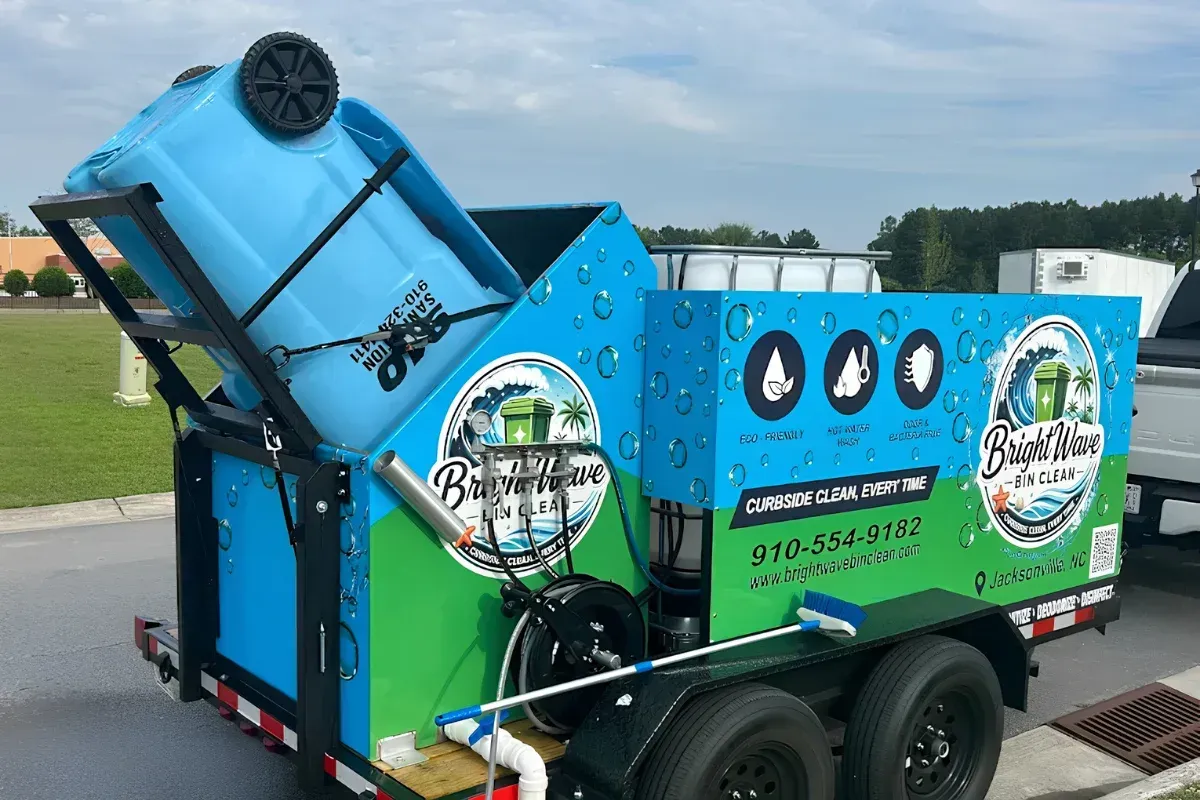
At Brightwave Bin Clean, we use professional equipment and high-pressure hot water to tackle the stuck-on mess inside the can. The goal is to clean, sanitize, and deodorize the bin instead of simply making it wet.
What Happens If You Never Clean Your Trash Cans?
Most trash cans will still function even when they are dirty.
The wheels turn. The lid closes. The garbage truck empties them.
But that does not mean everything is fine.
Over time, you may notice:
Stronger odors
Sticky residue
Food buildup
More flies around the bin
Maggots during warm weather
Dirty handles and lids
A worse mess after leaking bags
The problem usually grows slowly.
That is why people put it off.
You may tell yourself the smell is not that bad. Then summer arrives, a bag leaks, and suddenly the can becomes one of the nastiest things around the house.
Regular cleaning is easier than waiting for the worst possible moment.
How to Keep Your Trash Cans Cleaner Between Professional Cleanings
Professional cleaning helps reset the can, but your habits between visits matter too.
Bag Your Trash Carefully
Avoid placing loose food directly into the bin.
Make sure bags are tied securely before they go outside.
Double-Bag Messy Waste
Meat packaging, pet waste, and anything likely to leak may need an extra bag.
A second bag costs very little compared with dealing with dirty liquid across the bottom of a large trash can.
Keep the Lid Closed
A closed lid helps keep rainwater and unwanted animals out.
It also helps prevent loose trash from blowing around your property.
Clean Up Major Leaks Quickly
Do not leave a large spill sitting inside the can until the next season.
The sooner it is cleaned, the easier the problem usually is to handle.
Avoid Overfilling
Overfilled cans lead to torn bags, crushed trash, and residue around the lid.
Leave enough room for the lid to close properly.
Pay Attention After Collection Day
This is the best time to check the condition of the bin.
It is empty, so you can quickly see whether the bottom and sides need attention.
Is Monthly Trash Can Cleaning Worth It?
For some households, absolutely.
The biggest benefit is not just having a cleaner trash can.
It is not having to think about cleaning the trash can.
You do not have to drag out a hose, find a brush, scrub old food residue, deal with dirty water, or wonder whether the smell will return tomorrow.
You leave the can out, the dirty work gets handled, and you get one less unpleasant chore.
Monthly cleaning is especially useful when you already know your cans become dirty quickly.
If you are repeatedly rinsing them yourself or dealing with the same smells every few weeks, a regular schedule may make more sense.
When Is the Best Time of Year to Clean Trash Cans?
There is no bad time to start, but some times matter more than others.
Spring
Spring is a good time to clean out buildup from winter and prepare for warmer weather.
Summer
Summer is when odors, flies, and maggots often become much more noticeable.
If you only think about your trash cans once a year, summer is usually when they force you to pay attention.
Fall
Fall cleaning helps remove residue before cooler weather and holiday trash begin filling the cans again.
Winter
Trash cans may smell less during cooler weather, but they still collect grime.
Winter can be a good time for routine maintenance rather than waiting for the next hot season.
The better approach is usually not choosing one season.
It is choosing a schedule based on how your household actually uses the cans.
Popular Trash Can Manufacturers Homeowners Often Use
Some of the best-known trash can manufacturers make durable wheeled carts, heavy-duty containers, and outdoor bins for different household needs today.
Toter
Toter makes durable wheeled residential carts designed for curbside trash, recycling, and everyday outdoor household use. (toter.com)
Rubbermaid Commercial
Rubbermaid Commercial is known for durable BRUTE containers designed for demanding waste handling and long-term everyday use. (rubbermaidcommercial.com)
OTTO Environmental
OTTO manufactures residential waste and recycling carts in several sizes for curbside collection and household use. (OTTO-USA)
Suncast
Suncast offers outdoor refuse containers and trash hideaways designed for patios, decks, and residential outdoor spaces. (suncast.com)
The brand of trash can matters less than how it is used.
Even a heavy-duty, high-quality bin can smell terrible when food residue, leaking bags, and grime sit inside long enough.
Why Professional Trash Can Cleaning Saves You the Dirty Work
We have spent years learning how to clean trash cans properly, and experience matters. For better results and fewer headaches, contact Brightwave Bin Clean at 910-554-9182 to get started.
Professional service is not only about having equipment.
It is also about consistency.
You should not have to keep remembering that your bins need attention. A recurring schedule turns an unpleasant chore into something that simply gets handled.
That is often what homeowners appreciate most.
Frequently Asked Questions About Trash Can Cleaning in Richlands, NC
How does your trash can cleaning service work?
After your regular trash pickup, leave your emptied trash cans at the curb. We perform an initial inspection, deep clean the inside and outside, sanitize, deodorize, and complete a final inspection before leaving your bins ready to use.
How often should I schedule trash bin cleaning?
Most customers choose monthly service every four weeks or quarterly service every twelve weeks. The right schedule depends on how quickly your trash bins collect odors, gunk, bacteria, flies, insects, or maggots. We also offer one-time cleaning.
Can you clean both trash cans and recycle bins?
Yes. Our trash bin cleaning services can include residential trash cans and recycle bins. Most plans include up to two bins, and you can add more cans when needed. Contact us to confirm the number of bins you want cleaned.
Does professional cleaning really get rid of bad smells?
Our process removes the grime, residue, and buildup inside your cans that often cause strong odors. We clean, sanitize, and deodorize each bin to help maintain better cleanliness and stop that awful smell from coming back so quickly.
Can trash bin cleaning help with bacteria, flies, and maggots?
Yes. Dirty trash bins can hold food residue, mold, harmful bacteria, and odors that attract flies and maggots. A professional deep clean helps remove the buildup they are drawn to and creates a cleaner environment around your house.
Do I need to be home when you clean my bins?
No. As long as your bins are emptied and left accessible at the curb after trash pickup, you can go about your day. We handle the dirty work and complete the job without needing you to stand outside or wait for us.
Is your trash can cleaning process eco friendly?
We use professional cleaning equipment and manage dirty water and runoff carefully to help protect your property, neighborhood, and environment. Our goal is to provide effective cleaning services while leaving the area around your cans clean and tidy.
Can I change, extend, or cancel my service?
Yes. You can manage your schedule, extend your service, or cancel through your Jobber account. You can also contact Brightwave Bin Clean by phone if you need help. We are committed to making the process simple for our customers.
So, How Often Should You Clean Your Trash Cans in Richlands, NC?
For most homeowners, the answer is simple.
Clean them every 4 weeks if your household creates lots of food waste, deals with frequent odors, or wants consistently fresh bins.
Clean them every 12 weeks if your cans stay relatively clean and you mainly want to prevent long-term buildup.
Book a one-time cleaning when the cans already smell terrible, have heavy grime, or need a complete reset.
The mistake is waiting until the problem becomes unbearable.
Trash cans are supposed to hold garbage, so they will never be the prettiest part of your home. But they also do not have to smell awful, attract flies, or make you hold your breath every time you open the lid.
That is the real value of regular trash can cleaning in Richlands, NC. It takes one dirty, unpleasant job off your list and helps keep a frequently used part of your property cleaner.
Brightwave Bin Clean provides professional trash can cleaning for homeowners in Richlands and surrounding Onslow County communities. When you are ready to stop scrubbing dirty cans yourself, call 910-554-9182 and we will help you choose the cleaning schedule that makes the most sense for your home.


